


Even in today’s digital-first world, print production continues to play a major role in branding, packaging, advertising, and promotional communication. From brochures and business cards to magazines and textile printing, printed media remains one of the most effective ways to create a lasting, tactile impression.
So, what exactly is print production? It is the complete process of creating printed materials from design preparation and file setup to the final printed output. The workflow combines creativity, technical precision, and printing technology to ensure the final product matches the original design accurately.
Whether it’s offset printing, screen printing, or digital printing, every project follows a structured workflow designed to maintain consistency and print quality.
Understanding the Print Production Process
The print production process involves several carefully managed stages that help transform a digital design into physical printed material.
The process typically includes:
- Design preparation
- File setup and proofing
- Printing execution
- Finishing and assembly
These stages require strong coordination between designers, printers, operators, and production management teams.
The Three Stages of Print Production
The three stages of the workflow are:
- Pre-Press
- Press
- Post-Press
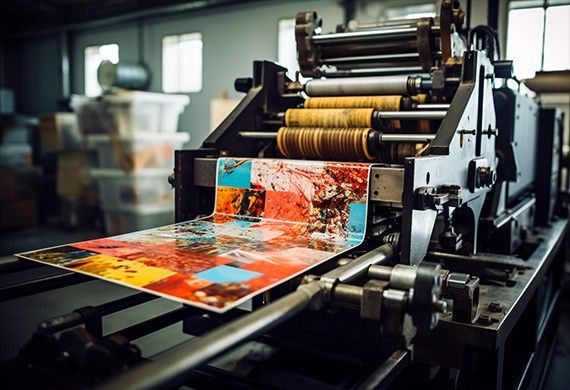
Each phase contributes to the overall final quality of the project.
Pre-Press: Preparing Files Before Printing
What Is Pre-Press?
Pre-press is the preparation stage before actual printing begins. This stage ensures the design file is technically correct and ready for production.
During pre-press, designers use software like Adobe tools, including:
- Photoshop
- Illustrator
- Adobe Acrobat
These tools help prepare files for accurate reproduction.
File Preparation & PDF Setup
Proper file preparation is essential for maintaining print quality.
Designers typically export projects into PDF format because it preserves:
- Fonts
- Layouts
- Color settings
- Image quality
The PDF file must include:
- Correct margin settings
- Bleed areas
- Proper resolution
- CMYK color mode
Unlike RGB, which is used for screens, CMYK is the standard color space for print.
Color Management & Proofing in Print Production
Good color management ensures the printed result matches the original design.
This stage includes:
- Digital proofing
- Color calibration
- Print proofs for approval
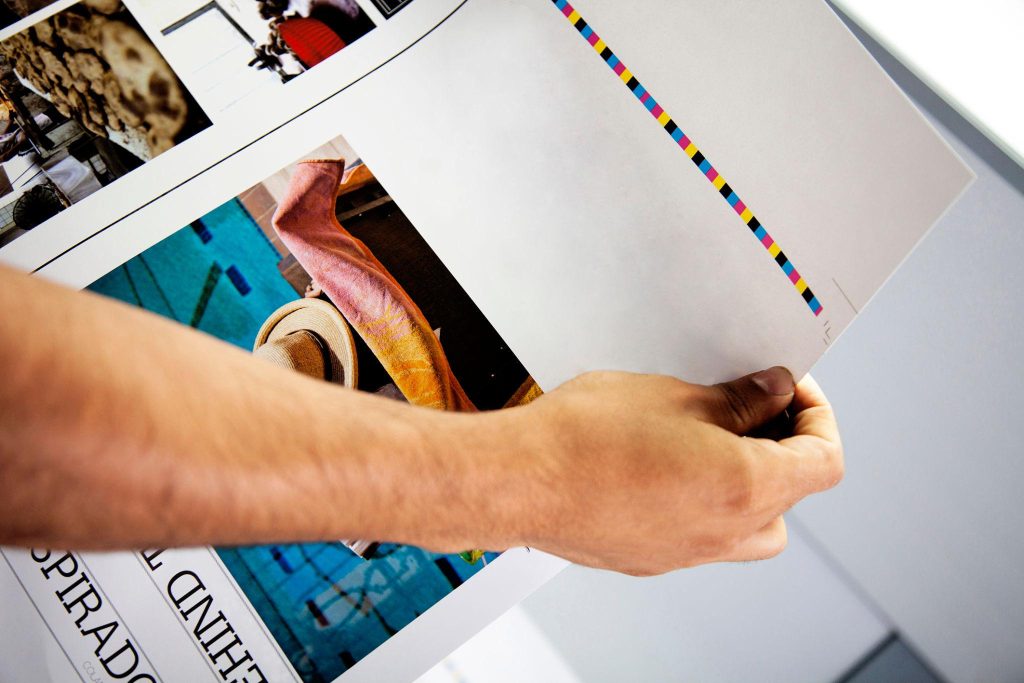
A proof allows clients and operators to identify errors before the project goes to press.
Modern digital proofing helps catch errors in real time and reduces unnecessary paper waste.
Preflight & Imposition
A preflight check scans the design file for technical issues such as:
- Missing fonts
- Incorrect image resolution
- Wrong color settings
Meanwhile, imposition arranges pages in the correct order before printing so the final booklet or brochure assembles properly.
These technical checks help avoid production delays and quality issues later in the workflow.
Press Stage: Where Printing Happens
The Actual Printing Process
The press stage is where the design is physically transferred onto paper, textile, or other surfaces.
This is the stage where the design becomes a tangible product.
The operator carefully monitors:
- Ink consistency
- Alignment
- Color accuracy
- Print registration
Maintaining precision during this stage is critical for achieving high-quality output.
Different Printing Methods
Modern businesses use different printing methods depending on the project type and quantity.
Offset Printing
Offset printing is ideal for:
- High-volume print runs
- Magazines
- Brochures
- Packaging
It provides excellent color consistency and print quality but may involve higher setup costs because of the need for plates.
Digital Printing
Digital printing is faster and more flexible for smaller print runs.
Advantages include:
- Faster turnaround
- Lower setup costs
- Personalized printing
- Reduced paper waste
This method is commonly used in modern print production for marketing materials and quick-turnaround projects.
Screen Printing
Screen printing is one of the oldest printing techniques and is often used for:
- Textile printing
- Posters
- Promotional merchandise
Historically, this method evolved from hand-carved wooden blocks and stencil techniques.
Ink, Paper & Print Finish
The combination of ink, paper type, and finish directly affects the visual impact of the project.
Popular finishes include:
- Matte
- Glossy
- Textured finishes
These choices influence the tactile feel and appearance of the final print.
High-quality materials help improve reproduction accuracy and overall presentation.
Post-Press: Finalizing the Printed Product
What Happens During Post-Press?
The post-press stage focuses on finishing and assembling the printed sheets into the final product.
This phase may include:
- Cutting
- Folding
- Binding
- Laminating
- Packaging
The post-press process ensures the printed material is polished, durable, and presentation-ready.
Quality Control & Final Inspection
Before delivery, teams conduct quality control checks to verify:
- Print alignment
- Color consistency
- Finishing accuracy
- Overall presentation
This final inspection helps ensure the output matches the approved proof and maintains professional standards.
Print Production Services by Raka Entertainment
For brands looking for reliable and high-quality print solutions, Raka Entertainment offers professional print production services tailored for marketing, branding, and promotional needs. From brochures and packaging to large-format prints and creative brand collateral, their team focuses on precision, color consistency, and strong visual execution to ensure every printed material reflects the brand professionally.
Modern Print Production & Automation
How Digital Technology Changed Printing
Today, modern print production relies heavily on digital technology and automation.
Advanced systems now help:
- Automate repetitive tasks
- Improve production management
- Reduce manual errors
- Increase efficiency
Automation tools also help print service providers create better workflows with print while reducing production timelines.
Print Workflow & Integration
A streamlined workflow improves efficiency across the entire process.
Modern systems can integrate:
- Design software
- Printers
- Proofing systems
- Production tracking tools
This integration allows teams to manage projects more efficiently in real time.
Print Production in Branding & Marketing
Businesses continue using print because physical materials create stronger sensory engagement.
Common printed materials include:
- Brochures
- Flyers
- Packaging
- Promotional banners
- Catalogs
- Business cards
Unlike digital ads, print provides a tactile experience that often improves brand recall.
Well-designed printed material helps businesses strengthen professionalism and credibility.
Graphic Design & Print Precision
Strong graphic design is essential for successful printing.
Designers use:
- Vector graphics for scalability
- High-resolution imagery
- Proper typography and font selection
Attention to detail during the design phase directly impacts the final print quality.
Even small mistakes in alignment or formatting can affect the entire production outcome.
The Importance of Print Quality
High-quality printing requires:
- Accurate color reproduction
- Proper file setup
- Correct printer calibration
- Skilled operators
Every stage of the workflow contributes to securing supreme print quality.
Whether producing a single brochure or managing high-volume print runs, maintaining consistency is critical.
Future Trends in Print Production
The printing industry continues evolving with new technologies such as:
- Inkjet advancements
- Sustainable printing methods
- 3D printing
- Smarter automation systems
These innovations help businesses improve efficiency while reducing waste and operational costs.
As technology advances, print production continues blending traditional craftsmanship with modern digital capabilities.
Final Thoughts on Print Production
Understanding print production helps businesses and designers create more effective printed materials while maintaining consistency and quality.
From pre-press preparation and proofing to printing execution and finishing, every stage requires technical precision and creative attention to detail.
Whether it’s digital printing, offset production, or screen printing, a well-managed workflow ensures the final product accurately reflects the original design while delivering a professional and lasting impression.
